About
Design is how I look at everything.
Away from work that means a camera most weekends and the trim I drew for my own house before it was built. I live in Charleston, Tennessee.

Drawn, rendered, built
I designed the trim for my house. Three rooms, from the drawing to the room as built.
I work the same way away from a screen. When I had my house built I mocked the trim up in Figma over photos of the drywall, gave that to AI and had it render what I wanted, and gave my builder clear handoffs explaining the designs. Then I worked out with them what was realistic.


My drawing over a photo of the drywall: the chair rail in red, the picture-frame trim in black, and a sconce.
Where I have been
35 countries on six continents, usually with a camera.
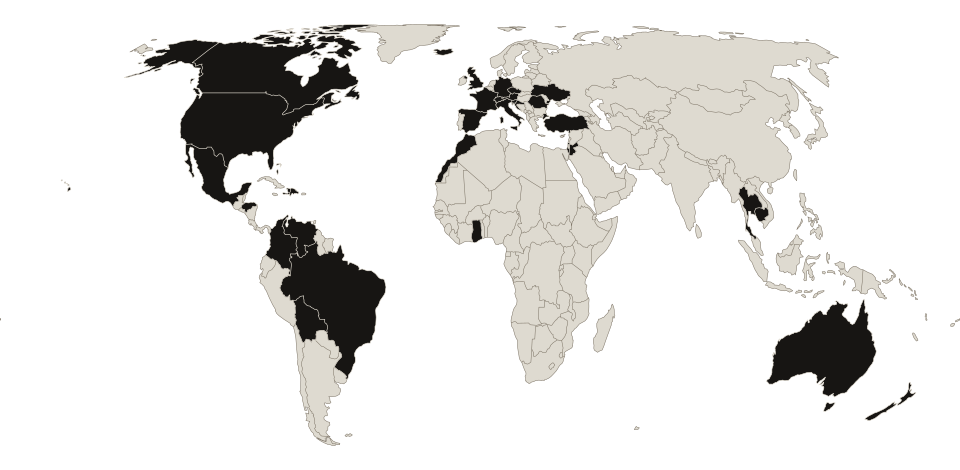
All 35 countries
- Australia
- Austria
- Bahamas
- Bolivia
- Brazil
- Cambodia
- Canada
- Colombia
- Croatia
- Czech Republic
- Dominican Republic
- England
- France
- Germany
- Ghana
- Haiti
- Honduras
- Iceland
- Israel
- Italy
- Jordan
- Mexico
- Monaco
- Morocco
- New Zealand
- Romania
- Slovenia
- Spain
- Switzerland
- Thailand
- Turkey
- Ukraine
- United States
- Vatican City
- Venezuela
Remote office
I love to travel and I like finding somewhere to work from when I get there.
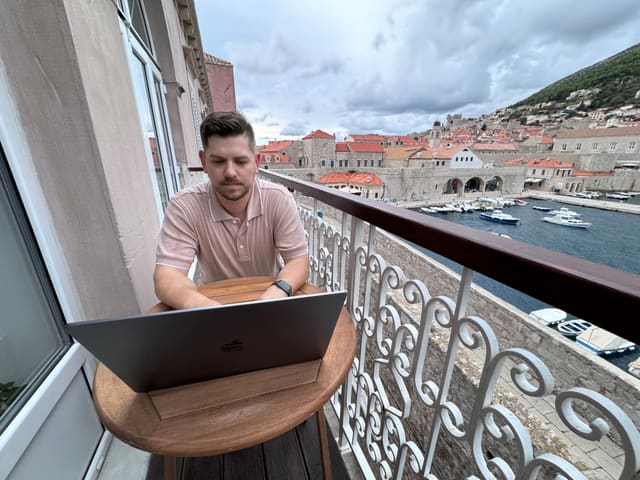
Dubrovnik, Croatia 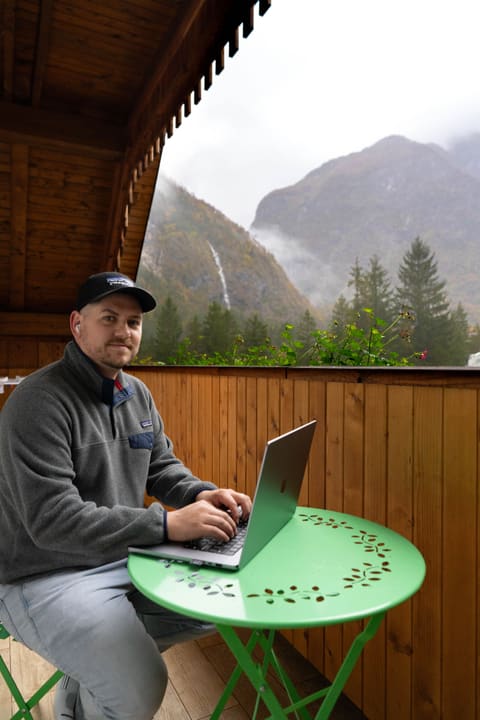
Triglav National Park, Slovenia 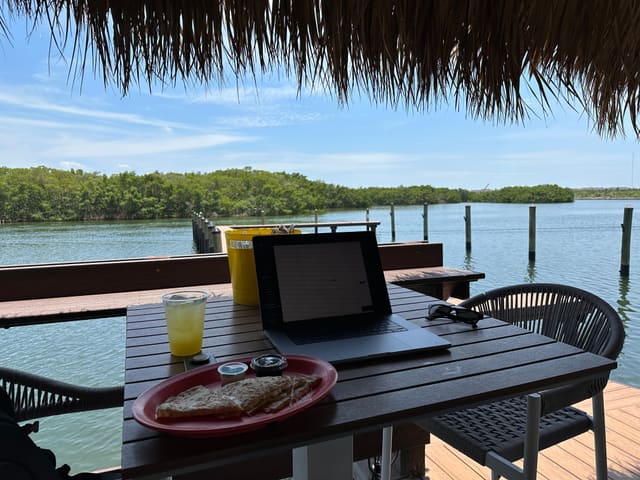
A causeway in Florida


Out of office
And sometimes the laptop stays shut.
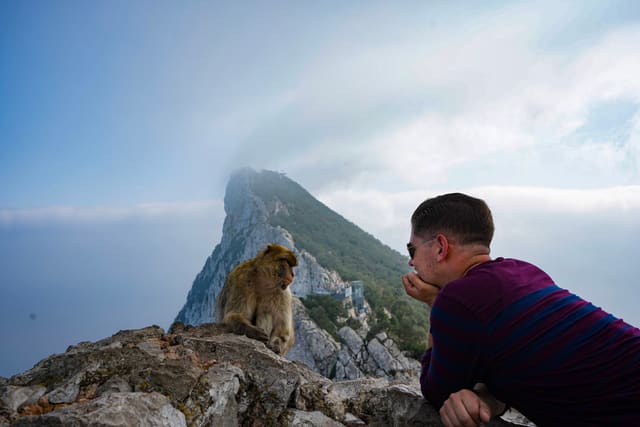
Gibraltar, 2019 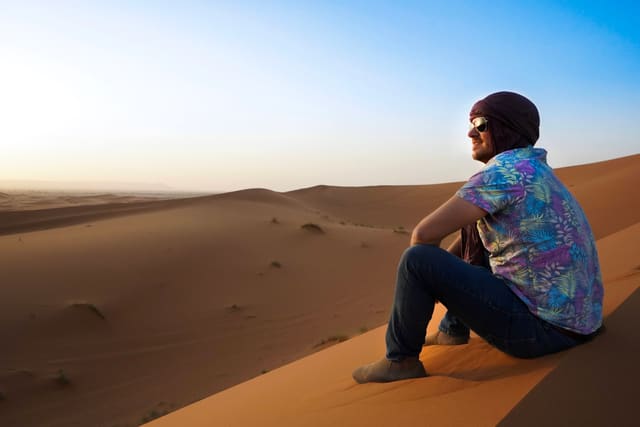
The Sahara, Morocco, 2019 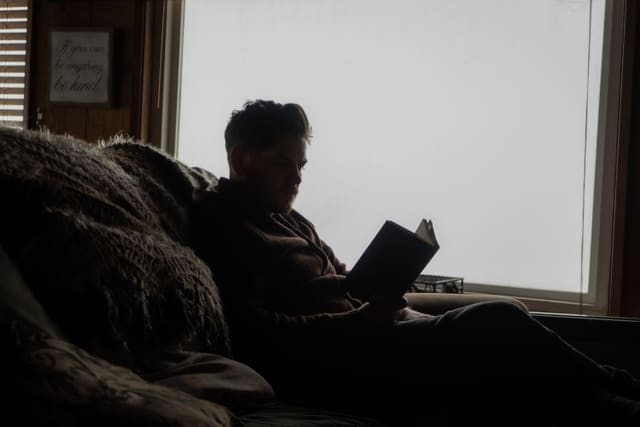
Reading, 2020


How this site is built
I built it with Claude Code, the way I build most things now: I decide what it should be and review what comes back, and the agent does a lot of the typing.
It is a static site: Next.js, exported to plain files, with no server and no component library. The design system is ordinary CSS: one set of tokens and four grounds (ink, paper, Codifi’s teal and Tephra’s ash) that re-point those tokens for whatever sits on them.
The name on the home page is real text. The photograph inside it is painted with background-clip: text and a mask, and three CSS variables move it. The photographs in it are two-tone on purpose: that puts a floor under the letters’ contrast, and the build fails if a tone drops below it.
A script builds every photograph into AVIF and JPEG at several sizes and strips its metadata: a field photo can carry the location of an archaeological site. The world map on this page is drawn when the site is built, so your browser downloads a picture of a map and not a map library.
A script checks colour contrast on every ground. The site meets WCAG 2.2 AA, works from the keyboard, reflows at 200% zoom, and keeps still if you have asked your system for less motion.
The portfolio is set in Newsreader and Public Sans. Codifi and Tephra keep their own product typography in their case studies.
What this site records
Umami counts visits: which pages are read and for how long and what site a visit came from. It sets no cookies.
When a visit starts, my phone gets a notification with the page, the site the visit came from and the city the connection is in. It comes as a Telegram message. A note of each visit is kept for 90 days so I can tell which of my links was opened: the page, the site it came from, the link’s code, the city, the network and the kind of device and browser. It never holds the connection’s address.
On the undo study you can ask Claude for a plan. Only the goal you pick is sent: to my planner at ai.voigt.work and from there to Anthropic. The planner counts how often each visitor asks by a hash of the connection’s address that changes every day. It forgets each ask after an hour.
In Ask Alex a question you type goes the same way: to ai.voigt.work and from there to Anthropic, where Claude writes the answer in my words from what is on this site. The last few questions and answers go with it so a follow-up makes sense. Each question and its answer also come to my phone as a Telegram message, with the city the connection is in, so I can see what people ask. The worker keeps none of it: it counts how often each visitor asks, by the same daily hash, and forgets that after an hour. A kind of work picked from the slash menu is answered in the browser and never leaves it.
Microsoft Clarity records how the pages are used: where people scroll and click and where a visit ends. It hides anything typed into the demos. It sets cookies so the pages of one visit stay together. Microsoft handles what it collects under its privacy statement.